In the world of CNC machining, aluminum alloys (such as 6061 and 7075) are prized for their excellent machinability and strength-to-weight ratio. However, for the machinist, aluminum presents two distinct challenges: extreme stickiness and a tendency for Built-Up Edge (BUE).
If you are experiencing poor surface finishes or frequent tool breakage, the issue usually isn’t the machine—it’s the choice of the end mill.
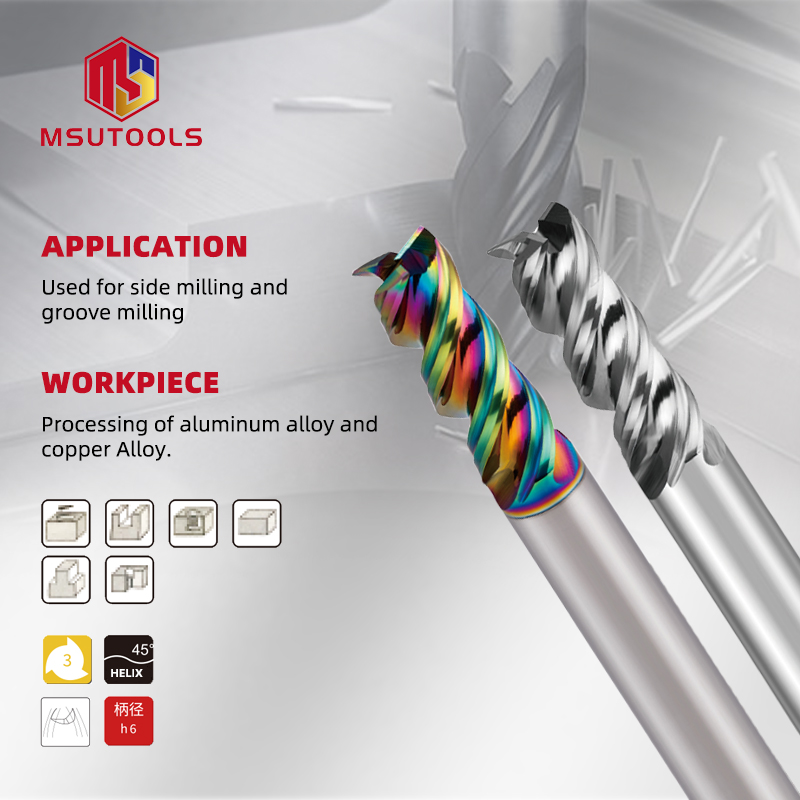
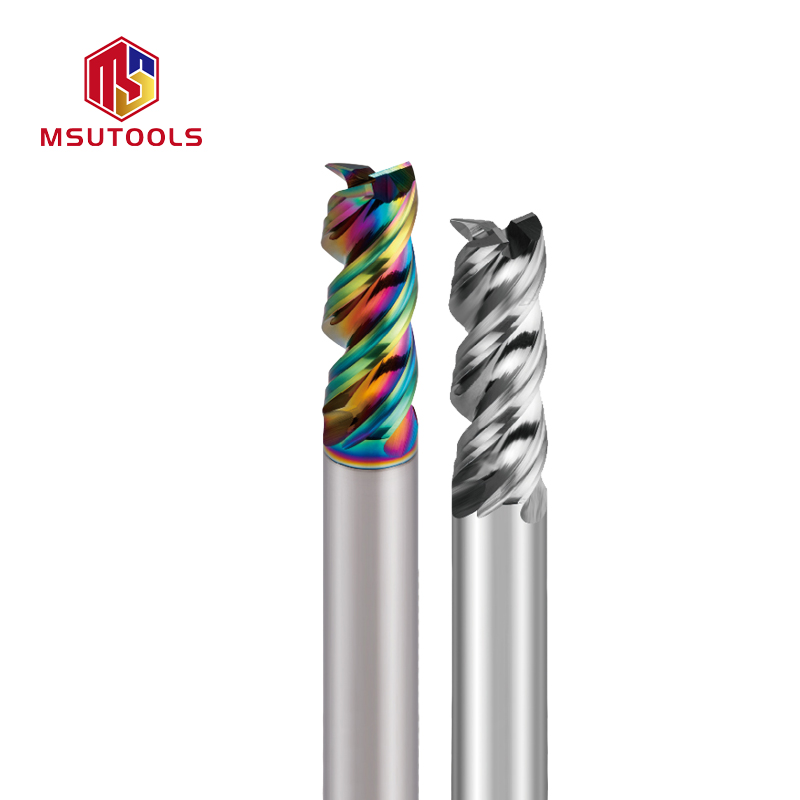
Why 3-Flute is the "Sweet Spot" for Aluminum
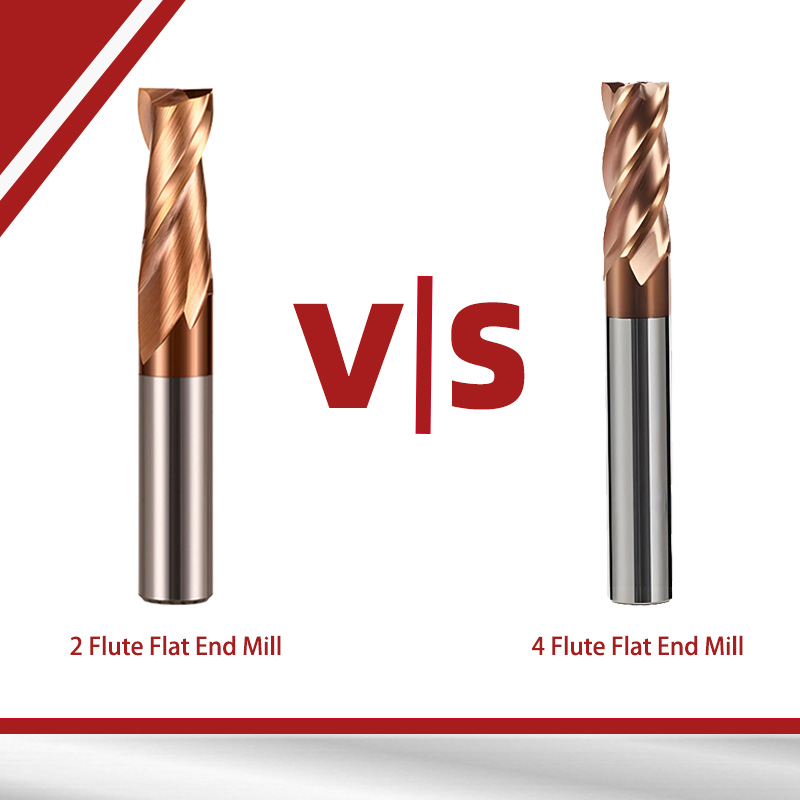
When machining steel, 4-flute or high-flute count tools are the norm. In aluminum, however, chip evacuation is the top priority.
- 2-Flute vs. 3-Flute: While 2-flute tools provide the largest gullet space for heavy roughing, 3-flute end mills for aluminum offer a perfect compromise. They provide enough chip clearance to prevent packing while offering higher tool rigidity and a better cross-sectional area.
- Balance and Harmonics: The 3-flute design significantly reduces vibration (chatter), which is critical for achieving a mirror-like finish on thin-walled aluminum components.
Coating Options: ZrN vs. Bright (Uncoated)
Aluminum has a chemical affinity for aluminum-based coatings (like the common TiAlN). This leads to material welding onto the cutting edge.
- Bright (Uncoated): For general-purpose aluminum machining, a polished, uncoated carbide tool is often sufficient. The key is a razor-sharp, polished edge.
- ZrN (Zirconium Nitride): This is the gold standard for aluminum. ZrN offers high hardness and an extremely low coefficient of friction. It creates a “non-stick” barrier on the tool, significantly extending tool life and allowing for higher cutting speeds.
- DLC (Diamond-Like Carbon): For high-silicon aluminum or high-volume production, DLC provides the ultimate wear resistance.
Practical Guide: Aluminum Cutting Parameters
To achieve the best Metal Removal Rate (MRR), use these starting parameters for carbide end mills:
| Material Grade | Tool Type | Recommended SFM | Chip Load (IPT) |
| Aluminum 6061 | 3-Flute Carbide | 600 – 1000 | 0.002″ – 0.005″ |
| Aluminum 7075 | 3-Flute ZrN Coated | 800 – 1200 | 0.003″ – 0.006″ |
| Cast Aluminum | 2-Flute Polished | 500 – 800 | 0.001″ – 0.004″ |
Expert Tips to Improve Machining Quality
- Use High-Volume Coolant: In aluminum machining, coolant isn’t just for heat; it’s for flushing chips away. If a chip is re-cut, it will likely weld to the tool.
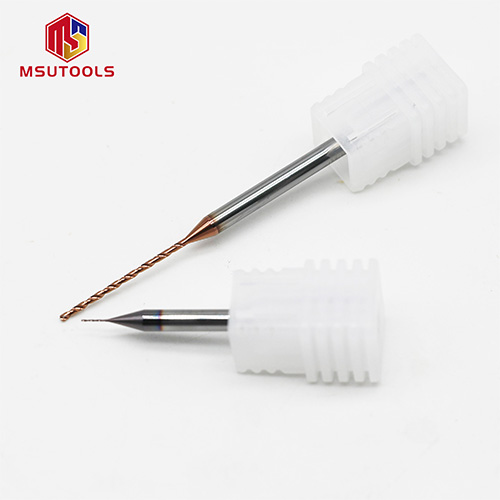
- Check Your Runout: For small-diameter end mills, even minor runout can cause uneven loading on the flutes, leading to premature chipping.
- Utilize Ramping: Avoid straight plunges whenever possible. Using a ramp or helical entry prevents chip packing at the center of the tool.
Looking for the Best Tools for Your Aluminum Projects?
At MSUCARBIDE, we understand that every minute of downtime is a cost. Our Series 300 3-Flute tools are specifically engineered for high-performance aluminum milling, featuring micron-level polished flutes to ensure superior chip evacuation at high RPMs.
 [Browse our Aluminum Cutting Tool Series]
 FAQ
Can I use a 4-flute end mill for aluminum?
While possible, it is not recommended. 4-flute tools have smaller chip gullets. At high speeds, aluminum chips will likely pack the flutes, causing the tool to snap instantly.
Why is my surface finish poor in aluminum?
This is usually caused by Built-Up Edge (BUE). Try increasing your cutting speed (SFM) or switching to a 3-flute tool with a ZrN coating to reduce material adhesion.
What is the best coating for aluminum?
Zirconium Nitride (ZrN) or DLC are the best choices. Avoid TiAlN, as the aluminum in the coating will react with the workpiece material.
What type of raw material you use for make end mills for aluminum?
The ultrafine-grain design and homogeneous microstructure of the substrate enable superior edge grinding and finishing performance, making it ideal for aluminum alloy end mills.
If your end mills for aluminum can replace Inova tools Garant from Hoffmann?
Yes. MSU Carbide end mills for aluminum are specially designed.
What is RPM can be run for your cutter?
Our end mills can be run at high speed, RPM range can be 12000-24000.
How do I choose between 2-flute and 3-flute aluminum end mills?
2-flute aluminum end mills offer better chip clearance and are ideal for roughing, slotting, deep cuts, and high-speed machining.
3-flute aluminum end mills provide a smoother finish and are better for semi-finishing and finishing.
Which one is better for roughing or finishing?
2-flute aluminum end mills are better for roughing and slotting, while 3-flute aluminum end mills are better for smoother finishing.
Do you offer custom sizes or special geometry?
Yes, we offer custom sizes and special geometries. Please send us your requirements.
What spindle speed and feed rate should I use?
Use high spindle speed and a moderate feed rate. Start with the tool supplier’s recommended cutting parameters, then adjust based on tool size and machine stability.
What is the delivery time and shipping method?
We can ship 4-7 days if have stock, if no stock, we need 15 days for production time. The delivery time depends on the order details and destination. We can arrange shipping by DHL,UPS, FEDEX.